
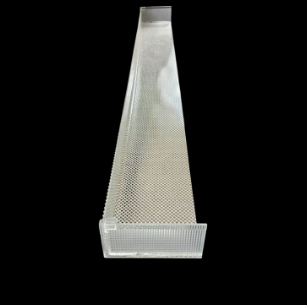
Lighting is very important to the appearance and feel of a space, be it a commercial office, a retail store or even a home. As most individuals focus on the type of light fixture or bulb, the fluorescent light diffuser is equally crucial. It has a direct effect on brightness, glare and the general mood of a room. Selecting the appropriate diffuser is not only a way to make the visual environment more comfortable but also to increase energy efficiency and enhance the environment’s beauty. There are many materials, shapes, and designs to choose from, so learning how to pick the most suitable one can help a lot in your lighting setup.
Understanding What a Fluorescent Light Diffuser Does
A fluorescent light diffuser is meant to spread light uniformly and minimize glare and severe shadows. Fluorescent tubes can emit a high-intensity direct light, which can be uncomfortable for the eyes without a diffuser. Diffusers ease this effect by distributing light over a broader surface, producing a more balanced and comfortable atmosphere.
You would find diffusers used in commercial settings like hospitals and offices to maintain proper lighting according to the business’s needs. At your place, they add a level of comfort to your home, allowing you to use light appropriately without it being too much.
Choosing the Right Material for Durability and Performance
Fluorescent light diffuser material greatly influences its performance and lifespan. The normal materials are acrylic, polycarbonate and polystyrene. All of them possess their own peculiarities and fit in different settings.
Acrylic diffusers are recognized for their clarity and homogeneous diffusion of light. The ease of use and low cost of acrylic diffusers make them a popular choice for most traditional indoor applications. Polycarbonate diffusers are distinguished by their resistance to impact and robustness, making them suitable for any application where safety or sturdiness is of utmost concern, e.g., industrial settings and educational facilities.
Polystyrene diffusers tend to be cheaper but might not be as long-lasting. When choosing a material, one should consider the environment, potential effects, exposure, and long-term maintenance needs.
Selecting the Right Pattern and Design
The diffuser layout or pattern defines how light is dispersed within an area. Patterns have different applications, and the right pattern depends on what you wish to achieve.
One of the most common ones is a prismatic diffuser. They have a geometric design that helps distribute light evenly, reducing glare. They are highly employed in offices and commercial buildings.
The frosted diffusers have a softer, more diffuse look. They fit perfectly in places where atmosphere is valued, such as a home or a hospitality setting. Clear diffusers produce the most light with the least glare and should be used in utility spaces where brightness is most important.
The diffusion pattern of each design will help ensure that the selected diffuser matches the space’s purpose.
Ensuring the Correct Size and Fit
The right size and fit are among the most important considerations when selecting a fluorescent light diffuser. An inappropriate diffuser may cause uneven light, light gaps or even safety risks.
It’s very important to measure your current lighting fixtures before you buy new ones. There are two general categories of size, so you can buy either type depending on whether your fixtures are standard size! Another thing to note is that the thickness of the lenses can impact how securely they fit into the mess of something.
Another consideration is the installation method: some diffusers fit on drop-in ceilings, while others require mounting. Selecting the proper size and fitting will ensure that the installation is quick and efficient.
Considering Energy Efficiency and Light Output
Although diffusers are most commonly employed to regulate the distribution of light, they may also affect the energy efficiency. An effective diffuser would produce the maximum amount of light with the fewest additional fixtures or high-wattage bulbs.
High-quality diffusers can pass more light while minimizing glare. Such a balance ensures that the spaces are well-lit without consuming more energy. Conversely, poor-quality diffusers can be too opaque, causing dark rooms and the need for additional lighting.
The choice of a diffuser should complement your current lighting system. Long-term cost savings can be achieved by selecting a product that maximizes efficiency.
Matching the Diffuser to Your Space’s Aesthetic
In addition to functionality, a fluorescent light diffuser also improves the aesthetics of a given space. The correct decision can be made to align with interior design and keep the lighting functional.
Diffusers tend to be constructed from sleek, transparent materials. This adds to the modernity and professionalism of the office setting. Home-use diffusers tend to be frosted and decorative, with a subtler appearance than office-use diffusers. The innovative nature of diffusers may be exploited in a retail setting when presenting products on display.
When choosing a diffuser, consider how it will fit into the room’s overall look. You need to find the right mix between functionality and aesthetics.
Maintenance and Replacement Considerations
Over time, fluorescent light diffusers can become discoloured, cracked, or lose their ability to spread light effectively. To ensure your lights perform properly, you must maintain them through routine care and replacement.
The presence of dust and dirt may reduce the amount of light produced, so it is advisable to clean it regularly. If a diffuser is yellowed or damaged, it can be replaced in time to make the room look brighter.
When choosing a replacement diffuser, one can select a durable material and design that will last a long time. This lowers the replacement rates and guarantees a steady output.
Conclusion
When choosing the best fluorescent light diffuser, consider many factors before selecting the panel that fits inside the fixture where you intend to place your fluorescent lights. The correct material, design, size, energy efficiency and aesthetics of a diffuser must all be carefully considered to improve the quality of light, create a comfortable environment and enhance the overall function of a space.
By understanding the different types of diffusers available and how each meets your particular needs, you will be able to select the most suitable and effective fluorescent light diffusers to create a refreshed appearance in any lighted area you are upgrading (office), remodelling (home), or featuring in your business. It is a simple and sensible choice to invest in the right fluorescent light diffuser!


A School Lighting Cover Retrofit Example That Works
See a school lighting cover retrofit example that preserves existing fixtures, improves classroom light quality, and keeps maintenance costs under control.
Guide to Street Light Refractors for Better Fit
Use this guide to street light refractors to identify lens styles, check fit, choose materials, and replace damaged roadway fixture optics.
Can Acrylic Replace a Glass Light Diffuser?
Can acrylic replace glass diffuser panels? Compare light transmission, safety, heat resistance, fit, and cost before ordering a replacement cover first.